Wrenfield: Friends and Fallings-Out · for ages 6 to 8
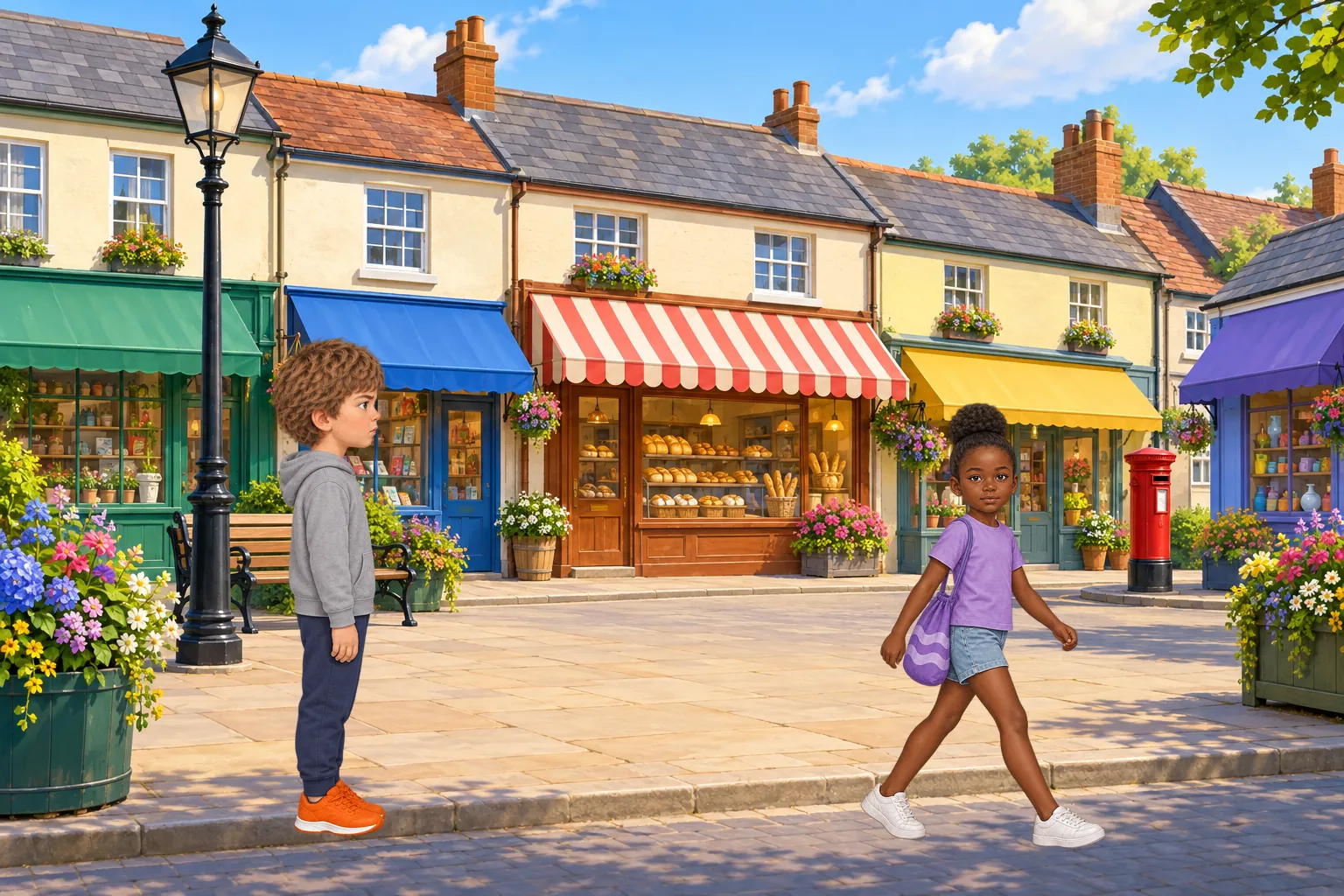
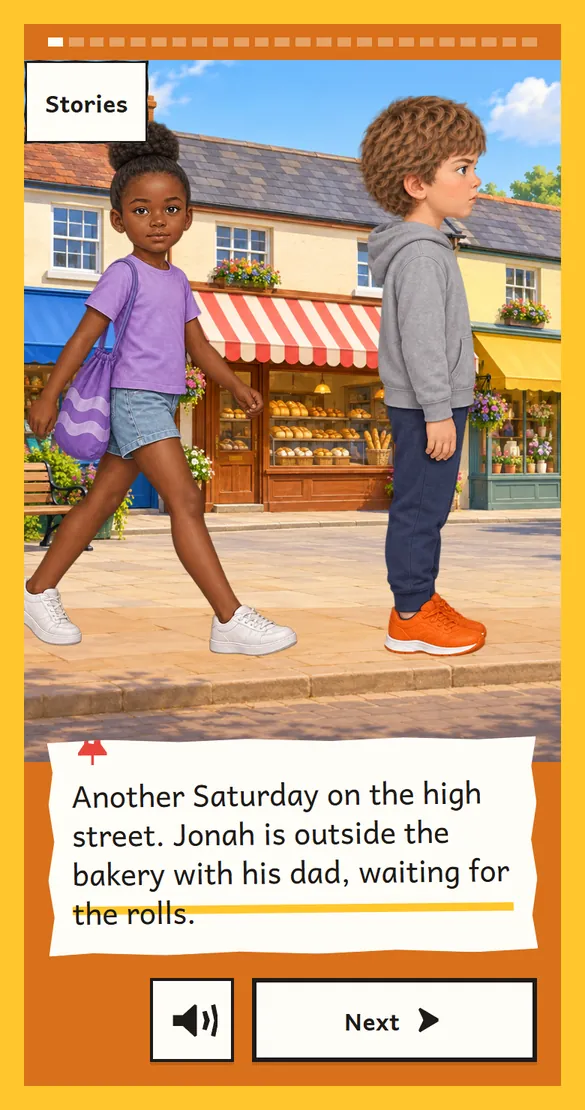
Dara walked straight past. What should Jonah do?
Wrenfield is a set of short, spoken stories set in one small village. In each one, your child reads a face, works out what the person on the screen wants, chooses the words — and finds out what happens next.
Play the first story, free How a story works
Coming soon to the App Store and Google Play.
Every problem, the same four questions
This is The Wave, the free story. Jonah shouts hello to his friend Dara on the high street. She does not stop, and she does not turn round. Here is what your child is asked, in the order they are asked it.
-
1 What happened?
First the facts, before any feelings. Which of these did you see?
- Jonah called out to her.
- She was hurrying before he called.
- She kept walking when he called.
-
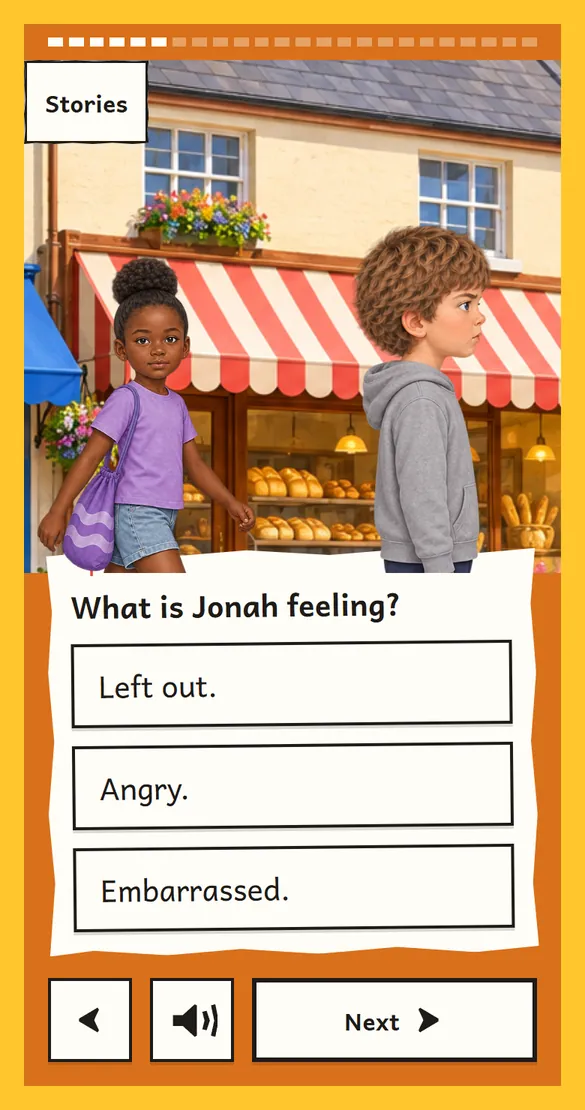
2 How does Jonah feel?
Then a feeling, read from his face and from what happened. Left out? Angry? Embarrassed? And the harder question: what shows you?

-
3 What does he want?
To know why she did that? To make her feel how it felt? For things to be normal at school? Wanting a thing and doing it are two separate steps.
-
4 What could he do?
Three real choices, each one said the way a child would say it. Your child picks one, and the story carries on from there.
There is no score at the end, no stars and no “well done”. What a child gets instead is what happened next — which is the only feedback anybody gets in real life.
More than one right answer
In The Wave, Jonah can shout once more, let it go until Monday, or look at the wall the next time Dara waves. Two of those turn out well, in different ways and at a different cost. One makes things worse. Your child can play it again and choose differently.
Every Wrenfield story is built the same way: three choices, two of which turn out well in different ways, and one that shows what it costs. Three rules sit underneath all of them.
- More than one way out can be right. Asking, speaking up, walking away, finding a friend and fetching a grown-up are each the right move somewhere.
- Giving in is never the answer. When a story lets a child simply go along with something unfair, it shows what that costs them.
- Nobody is the bad guy. Every one of the six children is the one who gets hurt in one story and the one who gets it wrong in another.
Meet Wrenfield
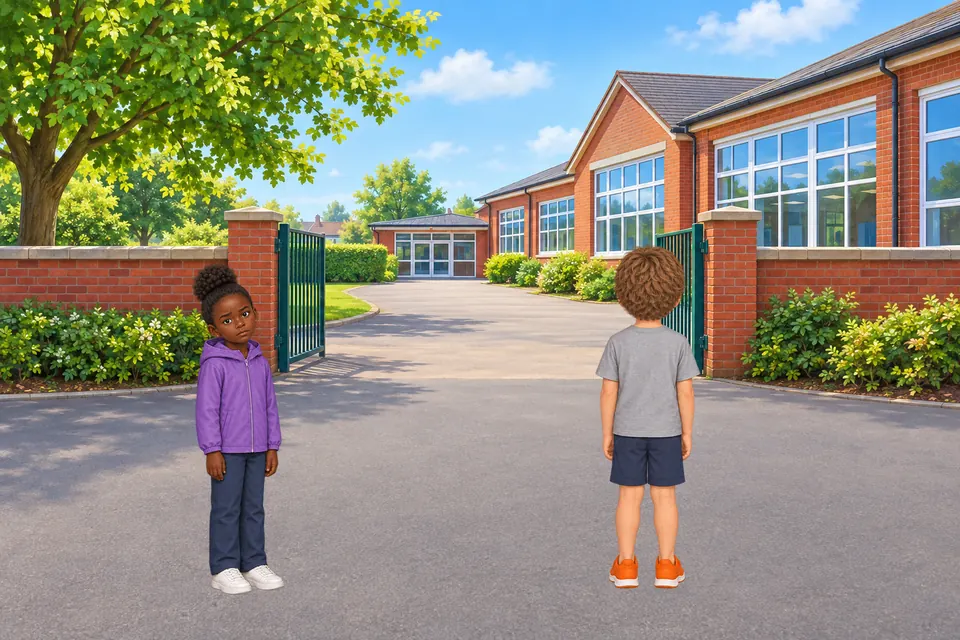
An ordinary village: a high street with a bakery, a rec with jumpers for goalposts, a school, a bus stop, and the kitchens at home. The same six children, story after story, so your child gets to know them — and cares what happens to them.
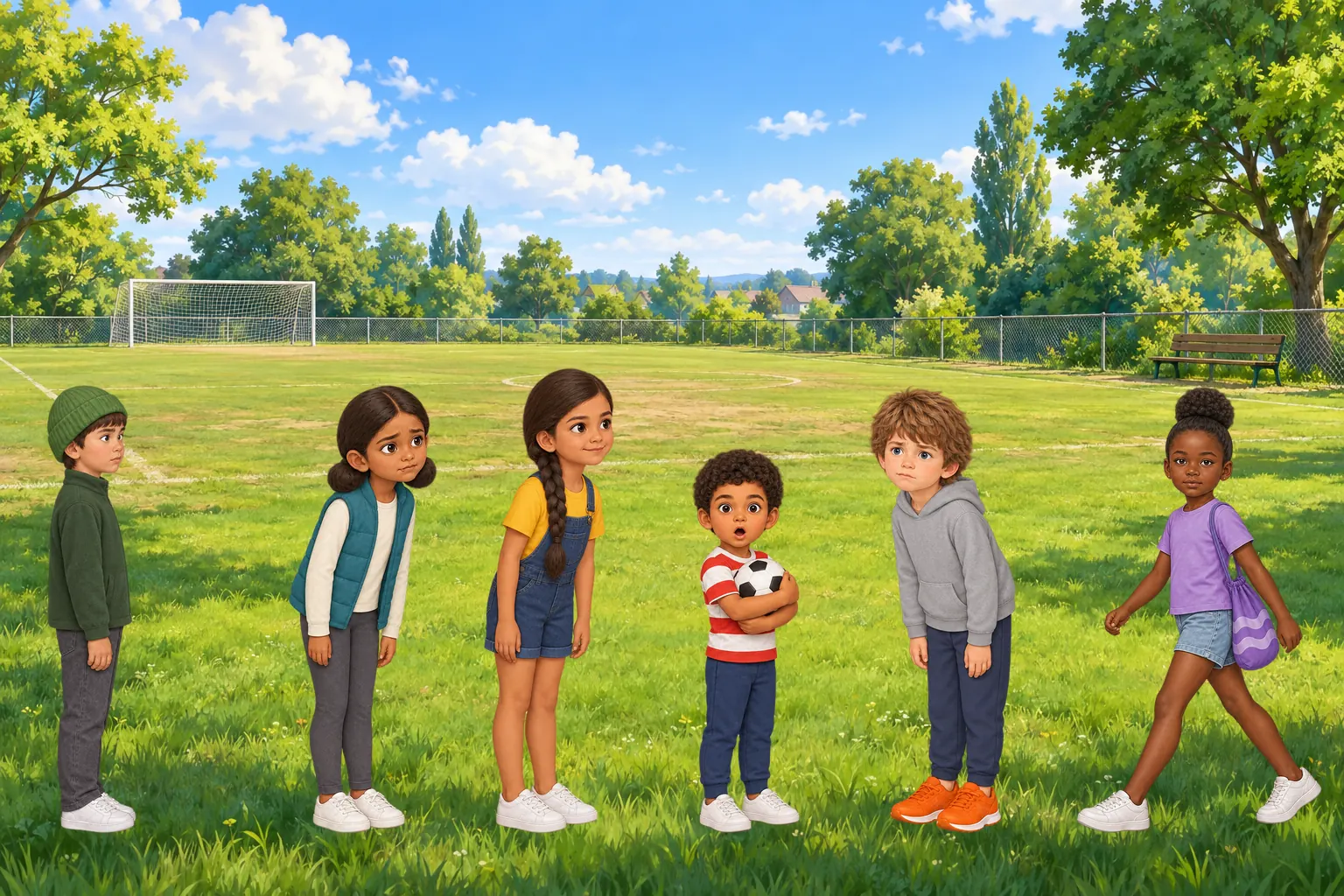
- KitThe newest in the village. He arrived a year ago and still waits to be asked in.
- PriyaNadia's friend for longer than anyone can remember. Notices a lot; says less.
- NadiaOrganises the Saturday game, and most other things, if you let her.
- OmarNadia's little brother, and the youngest of the six. Keen on everything.
- JonahAlways has a joke ready. Not every joke lands the way he means it.
- DaraKeeps count of everything, and never forgets a detail.
 The high street
 The rec
 The park
 The school gate
 A kitchen at home
 The corridor at school
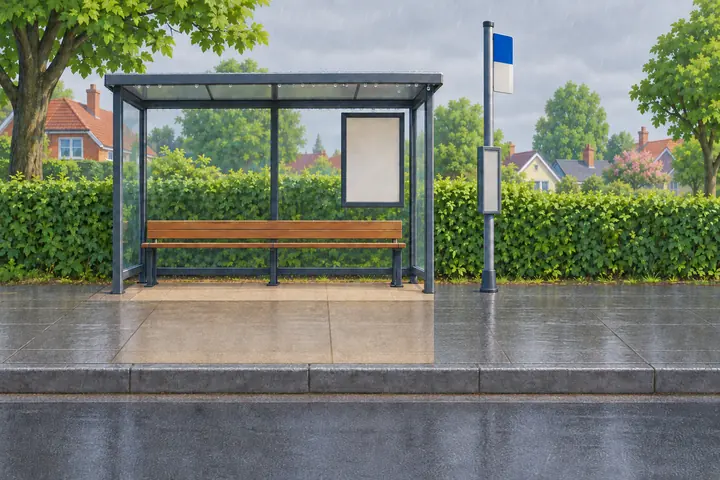 The bus stop, in the rain
 The lunch queue
Play The Wave, free, in your browser
The whole first story, exactly as it plays in the app, with every line read aloud. Nothing to install, no account, and nothing to type in.
Sit with your child for the first one. Turn the sound on, press Play, and let them choose.
For grown-ups
What your child gets
- Short stories made for ages 6 to 8, each finished in one sitting.
- Every line read aloud by a synthesised narrator voice. A grown-up can set it to words, voice, or both.
- A typeface chosen for children still learning to read, and text that grows with the phone’s own text-size setting, up to twice the size.
- Big buttons, and every picture described for screen readers.
- Stories built on a well-known model of how children make sense of a social situation, from the psychologists Nicki Crick and Kenneth Dodge.
What it never does
- No advertising, and nothing to buy inside the app. It is paid for once, up front.
- No accounts and no sign-in.
- No internet. The app is built without permission to use it, so nothing your child does can leave the phone.
- No scores, streaks, stars or badges, and nothing that nags a child to come back tomorrow.
- Progress is kept on the phone and nowhere else.
Coming soon
Wrenfield is not in the app stores yet. When it is ready it will be on the App Store and Google Play, and this page will link straight to it.
There is no mailing list to join. We would rather not hold your email address to tell you one thing, so the news will be here, and on brightkidzhub.com.